

From the Department of Pulmonology, New Delta Hospital, Nagpur
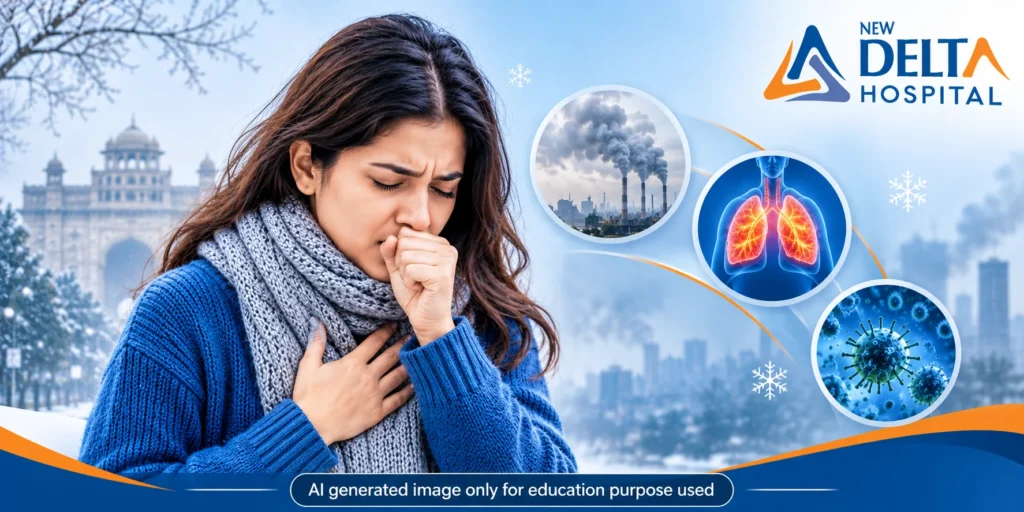
A cough that lasts a few days after a cold is common. A cough that won’t go away after two or three weeks is different, and it deserves a proper check. Every winter many families ask the same thing: is it the weather, the dust, asthma or an infection? This guide explains the common causes, what you can safely do at home, the warning signs, and when to seek cough treatment in Nagpur from a chest specialist.
Why Coughs Last Longer in a Nagpur Winter
Three things come together between November and February and cause a winter cough.
- Cold, dry air irritates the airways and makes them more sensitive.
- Smoke, dust and vehicle fumes stay closer to the ground in cold weather, so we breathe in more of them.
- Viral infections such as the common cold and flu spread more easily when people stay indoors together.
Any one of these can start a cough. Together they can keep it going for weeks.
How Long Is Too Long for a Cough?
Doctors group cough by how long it has lasted.
- Up to 3 weeks (acute cough): most often a cold, flu or other viral infection.
- 3 to 8 weeks (subacute cough): often a lingering cough after viral fever or infection.
- More than 8 weeks in adults, or more than 4 weeks in children (chronic cough): needs a doctor’s evaluation to find the cause.
Important: in India, anyone with a cough lasting two weeks or more is advised to get checked, because tuberculosis (TB) must be ruled out early.
Is It Pollution, Asthma or Infection?
The pattern of the cough gives useful clues. Only a doctor’s examination can confirm the cause.
Cough Due to Pollution or Irritation
- Usually a dry cough with throat irritation
- Worse outdoors, in traffic, near smoke or dust
- Often comes with burning eyes or a blocked nose
- No fever in most cases
Asthma Cough
- Dry cough at night or early in the morning
- Triggered by cold air, exercise, dust or strong smells
- May come with wheezing, chest tightness or breathlessness
- Often there is a history of allergy in the person or family
Cough Due to Infection
- Starts with fever, sore throat, body ache or a runny nose
- Wet cough with yellow or green phlegm is possible
- A dry cough can continue for some weeks after the fever settles
- High fever, chest pain or breathlessness may point to pneumonia
Other Common Causes of a Persistent Cough
- Allergy and sinus problems: mucus dripping down the back of the throat causes a tickling cough, often at night. Our ENT doctors evaluate this.
- Acid reflux: stomach acid rising into the food pipe can cause a dry cough, especially after meals or on lying down. Read our guide on why acidity keeps coming back.
- Smoking: long-term smokers can develop chronic bronchitis or COPD.
- Tuberculosis: cough for two weeks or more with evening fever, night sweats, weight loss or blood in phlegm.
- Some blood pressure medicines: a few can cause a dry cough. Do not stop any medicine on your own; ask your doctor.
Home Care for a Mild Cough
These steps are for a mild cough without warning signs.
What to Do
- Drink warm fluids and enough water through the day.
- Gargle with warm salt water for a sore throat.
- Avoid smoke of every kind, including cigarettes, agarbatti, mosquito coils and burning waste.
- Wear a well-fitted mask outdoors on days when the air is poor.
- Keep rooms ventilated and free of dust.
- Rest, and stay away from elderly family members and infants if you have fever.
What to Avoid
- Do not take antibiotics without a prescription. They do not work against viral infections.
- Do not give cough syrups to young children unless a doctor has advised them.
- Do not give honey to a child below one year of age.
- Do not use someone else’s inhaler or leftover medicines.
When to See a Doctor for a Cough
Book a Consultation If You Notice
- Cough lasting more than two weeks
- Fever for more than three days
- Wheezing, or a cough that disturbs sleep
- Thick yellow, green or foul-smelling phlegm
- Unexplained weight loss or night sweats
- Cough in a person with diabetes, heart disease, asthma or COPD
- Cough in a smoker that has changed in character
Go to Emergency Care Immediately If There Is
- Difficulty in breathing or breathlessness at rest
- Blood in the phlegm
- Chest pain or pressure
- Bluish lips, confusion or drowsiness
- A child who is breathing fast, pulling in the chest while breathing, or not feeding
New Delta Hospital’s emergency services are open 24×7. Emergency numbers: 838 108 1085 and 838 108 1086.
How a Chest Specialist Finds the Cause
A pulmonologist in Nagpur starts with your history and a chest examination. Tests are advised only if needed, and may include:
- Chest X-ray
- Spirometry (lung function test), a breathing test that helps detect asthma and COPD
- Sputum (phlegm) test, including a test for TB
- Blood tests at the pathology lab
- Bronchoscopy or a CT scan in selected cases
Treatment depends on the cause. It may involve inhalers for asthma, allergy medicines, treatment for reflux, or antibiotics when a bacterial infection is confirmed. Results differ from person to person.
Cough in Children and Elderly Family Members
Children and people above 60 can become unwell faster.
- Cough in children: watch the breathing more than the cough. Fast breathing, noisy breathing or poor feeding needs a doctor the same day. Our paediatric team sees children with cough and fever.
- Cough in the elderly: a new cough with tiredness, confusion or reduced appetite can be the only sign of a chest infection. A general physician can assess this.
- Flu vaccine: ask your doctor whether the yearly flu vaccine is suitable for elderly family members, pregnant women and people with long-term illness.
Cough Treatment in Nagpur at New Delta Hospital
The Pulmonology department at New Delta Hospital, near Rachna Ring Road Metro Station, Nagpur, evaluates cough, asthma, breathing and sleep-related problems. If you are looking for a chest specialist in Nagpur, the department’s consultants are listed below.
Our Pulmonologists
| Doctor | Designation | Qualifications | Registration |
|---|---|---|---|
| Dr. Anil Sontakke | Pulmonologist & Sleep Medicine Specialist | MBBS, MD (Chest), AFIH | MMC Registration 2001020347 |
| Dr. Vikrant Deshmukh | Interventional Pulmonologist | MBBS, MD (Pulmonary Medicine) | MMC Registration 2005031915 |
OPD hours are 9:00 AM to 9:00 PM. You can book an appointment with a chest specialist, see all our doctors in Nagpur, or contact us for directions.
Frequently Asked Questions
Which doctor should I see for a cough that won’t go away?
Start with a general physician or a chest specialist (pulmonologist). If a nose, throat or stomach cause is suspected, you may be referred to an ENT doctor or a gastroenterologist.
Is a dry cough at night a sign of asthma?
It can be. A dry cough that is worse at night or early morning, especially with wheezing, should be checked with a breathing test.
Can air pollution alone cause a cough for weeks?
Yes, ongoing exposure to dust and smoke can irritate the airways for weeks. Other causes still need to be ruled out if the cough continues beyond two weeks.
Do I need an X-ray for every cough?
No. The doctor decides after examining you. An X-ray is usually advised when the cough is prolonged or there are warning signs.
Is a cough after viral fever normal?
A mild cough can continue for a few weeks after a viral infection. See a doctor if it is getting worse, lasts beyond two to three weeks, or comes with fever or breathlessness.
When should I worry about my child’s cough?
If your child is breathing fast, has noisy or laboured breathing, is not feeding, or the cough has lasted more than two weeks, see a doctor promptly.
Conclusion
Most winter coughs settle on their own with rest, fluids and clean air. A persistent cough is the body’s way of saying something needs attention. Note how long it has lasted, when it gets worse and whether there is fever, wheezing or breathlessness, because these details help the doctor find the cause faster. Do not ignore a cough that lasts more than two weeks, and do not treat it with leftover antibiotics or cough syrups. Timely evaluation by a chest specialist helps identify whether it is pollution, asthma or infection, so the right cough treatment in Nagpur can begin early for you and your family.
Contact New Delta Hospital
- Address: Near Rachna Ring Road Metro Station, Nagpur, Maharashtra 440036
- Phone: 838 108 1085, 838 108 1086
- Email: contact@newdeltahospital.com
- OPD hours: 9:00 AM to 9:00 PM
- Emergency: open 24×7
- Appointments: Book an appointment online
Disclaimer: This article is for general health education only. It is not a substitute for medical examination, diagnosis or treatment. Please consult a qualified doctor for advice about your condition.